How do slip resistant floors work?
Slip accidents are by far one of the most common causes of workplace injuries, and the type of workplace accident that leads to the most sick leave each year. We actively work to reduce slip-related accidents and offer solutions for all types of floors and surfaces. But the question remains: what does it mean for a floor to be slip resistant?
Slip resistant floors are also referred to as safety floors and secure-step floors.
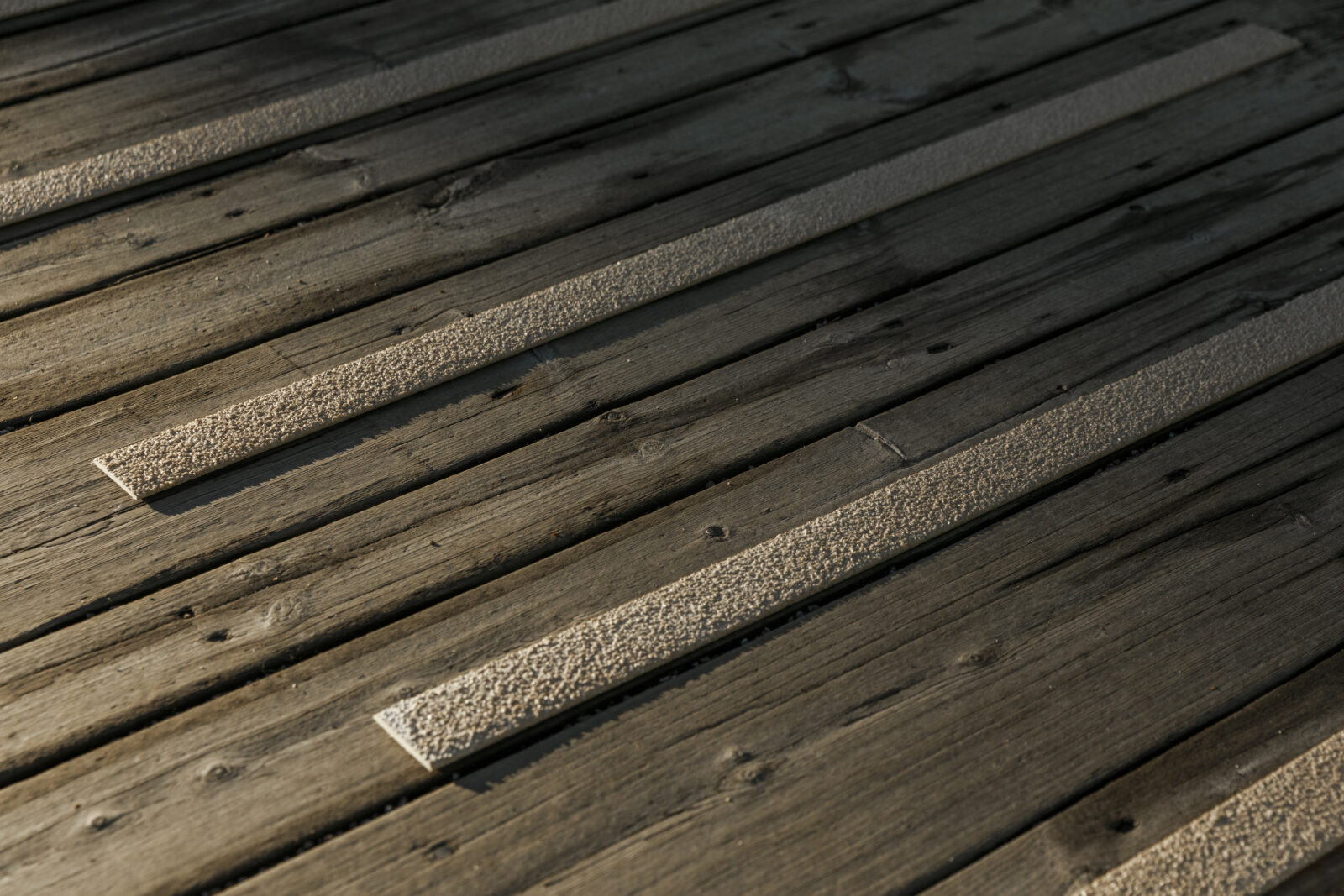
Slip-resistant floors are often found in environments where there is an increased risk of slipping. This may include food production facilities or large catering companies. They are also commonly used in premises with heavy foot traffic. By installing a safety floor in such environments, the risk of slipping is reduced, and the floor typically offers greater durability than a standard floor, as it does not wear down as easily. A worn floor increases the risk of slipping.Some slip resistant floors have a treated surface that allows people to walk safely on them. Often, there is a pattern on the floor that is not visible to the naked eye. This pattern slightly protrudes from the surface and creates friction when walked on.If you walk on a floor with friction particles, you will notice that the particles seem to grip your feet. This creates a high level of friction and provides excellent walking safety.A safety floor should be water-repellent and resistant to bacteria and fungi. Moisture and fungal growth can easily create slippery spots. If there are small holes or pores in the floor, bacteria can develop and compromise hygiene. If food residue, water, oil, or similar substances are spilled on a safety floor, it should still allow you to walk on it safely without the risk of slipping.A slip-resistant floor must pass a series of tests to be approved. Among other things, the surface roughness is measured using a special device. High surface roughness indicates that the floor is safe to walk on. Each floor can also be assigned a specific slip rating—the higher the result, the safer the floor. A third test that a floor must pass to be classified as slipresistant is the ramp test. In this test, the floor is mounted on a ramp and then covered with oil. A test person then walks on the surface to assess how safe it is after being exposed to oil.
Anti slip solutions for construction, property management, and public environments
Anti slip protection for industry
Anti slip for marine and offshore
Anti slip for transport and logistics
Anti slip solutions for swimming facilities and spas
Anti slip devices for home use