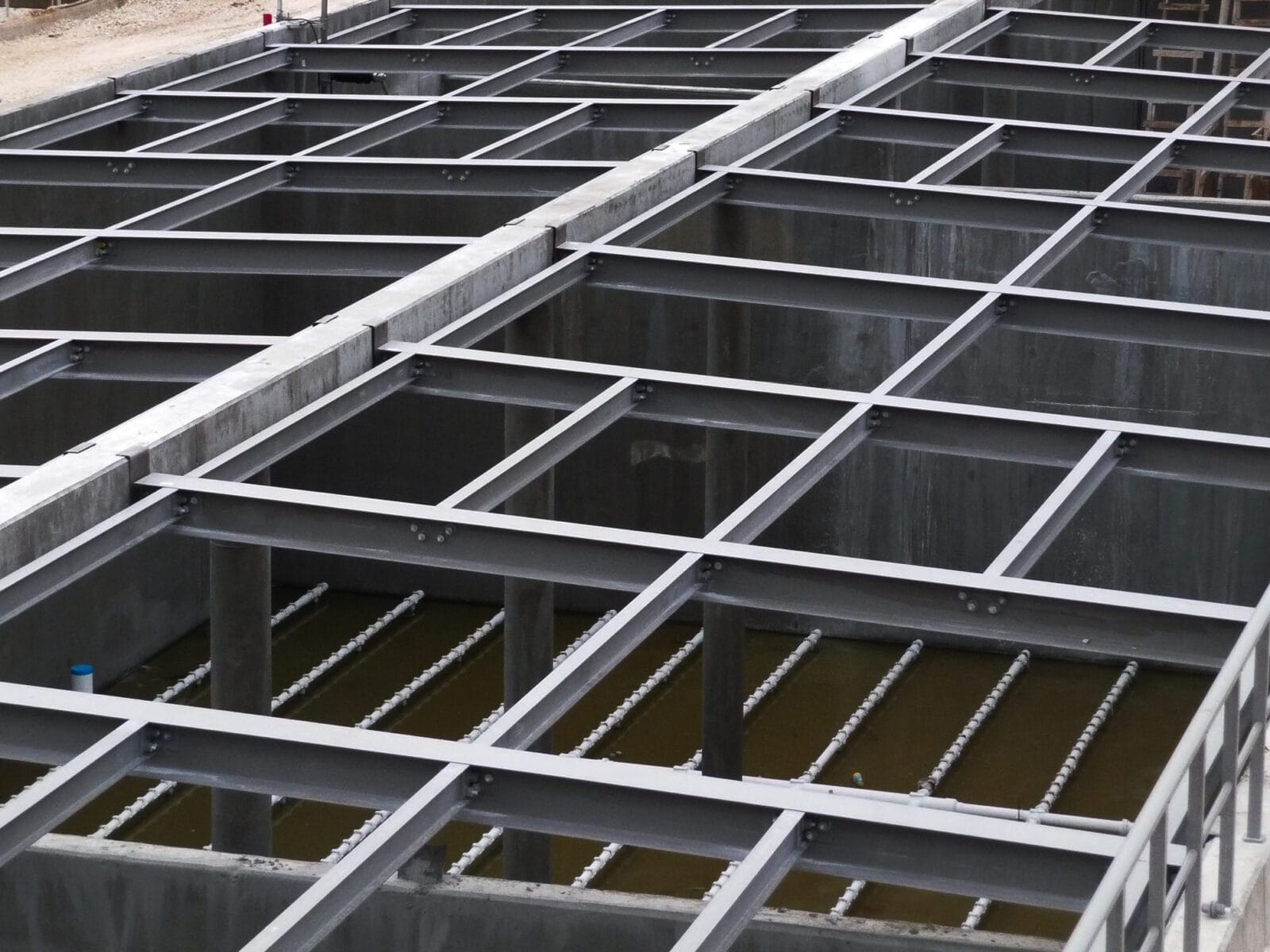
Advantages of fiberglass profiles
Our corrosion-resistant fiberglass (GRP) profiles have a very long functional service life, making them a cost effective alternative to wood, concrete, and steel. They require minimal maintenance, even in corrosive and aggressive environments.
Our wide range of GRP standard profiles enables robust and durable solutions for a variety of industrial applications – even in the most demanding environments. Suitable for everything from light load-bearing structures to custom constructions in industry, transportation, and infrastructure.GRP profiles combine low weight with high strength and exceptional resistance to corrosion, chemicals, weather, and UV radiation. They are completely metal-free, electrically insulating, and require no grounding or subsequent maintenance. This makes them particularly attractive for electrical installations, humid environments, aggressive process environments, and other demanding settings where steel is unsuitable.
Advantages of fiberglass profiles:
- Wide temperature range: -100°C to +180°C
- Self-extinguishing and halogen-free – contributes to high fire safety
- UV, weather and corrosion resistant – ideal for aggressive environments
- High mechanical strength
- Lightweight – facilitates transportation, handling and installation
- Electrically insulating – no earthing required
- Non-magnetic and metal-free – suitable for sensitive electronics or magnet-free zones
- Chemical resistant – resistant to acids, alkalis and solvents
- Maintenance-free – no rustproofing or painting required
- Can be machined with standard tools – even directly on site
- Smooth cut surfaces when sawing and drilling – no chipping or splintering
- Short construction time – easy assembly
- Long lifetime and low life cycle cost – cost-effective over time
GRP – Material selection and customization:
Standard profiles are manufactured with isophthalic polyester resin, but for special environments with even higher requirements we also offer:
- Vinylester: for extremely corrosive environments
- Phenolic resin: for high temperatures and fire requirements
- Epoxy: for specific electrical requirements
- Acrylic: for low smoke requirements


