Skip to content
A how to guide on how to guide.
Contrast marking.

A how to guide on how to guide.

Everything you need to know about contrast marking for floors, stairs, and glass: regulations, recommendations, design, and placement all in one place.

Klubba icon

What does the legislation say about contrast marking?

The Planning and Building Act issued in 2010 clearly states: A building must be accessible and usable for people with reduced mobility or orientation ability. This applies to both new buildings and renovations – as well as to the development of new public spaces and areas.

Kontrastmarkering-Trappa-Gul-2 icon

What does this mean in practice?

According to Boverket’s regulations and general advice 2013:9, easily removable obstacles in and around premises accessible to the public, as well as in public areas, must be addressed. This can be done, among other ways, by marking level changes in stairs and glass surfaces with contrast markings.

Contrast marking.

Contrast marking – how it works.

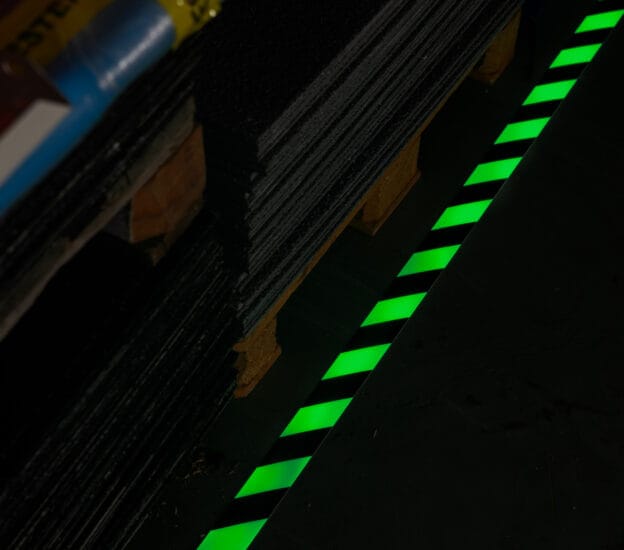
Contrast marking: lightness contrast.
Contrast marking: lightness contrast.
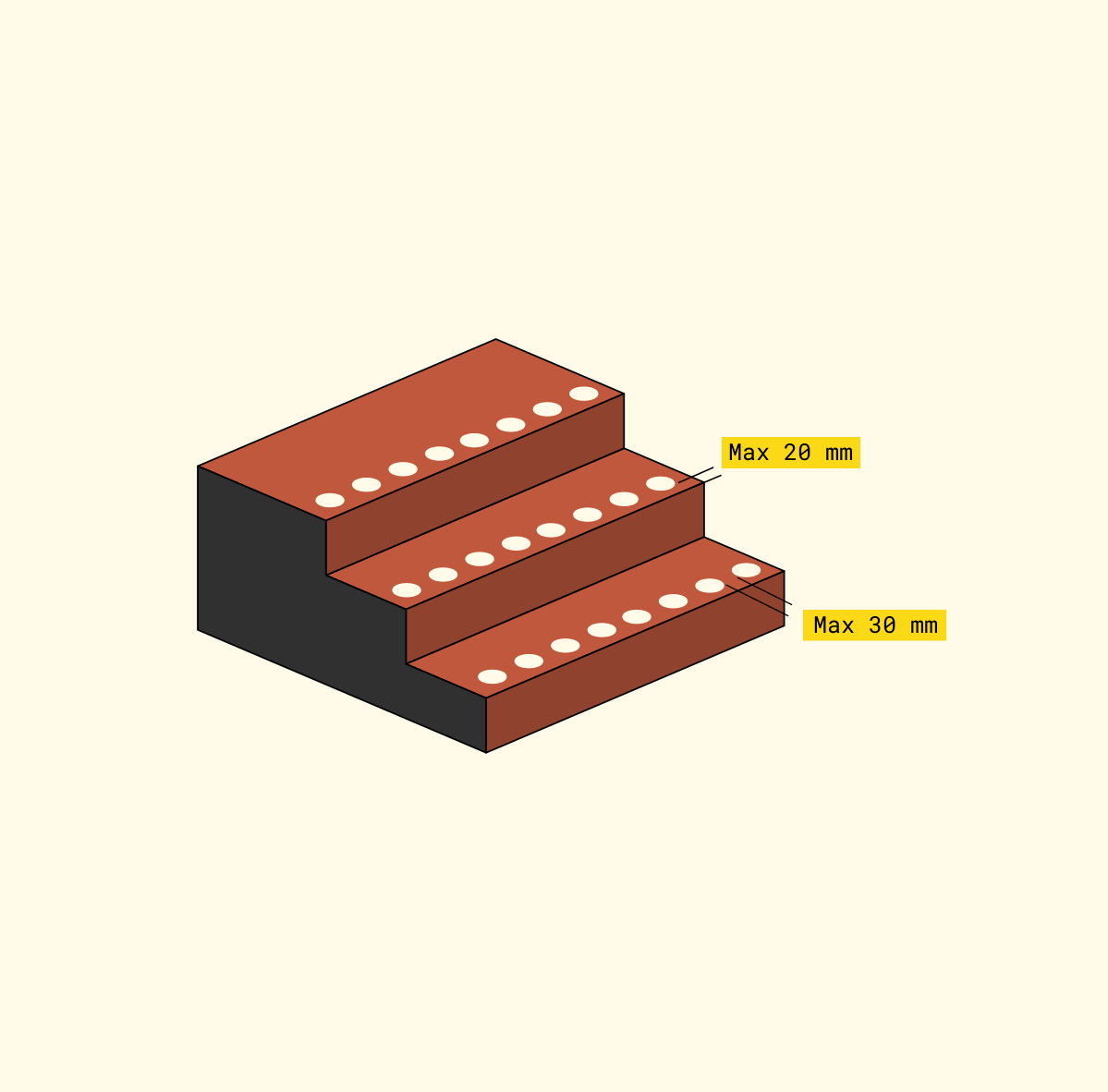
Both tactile guidance strips and contrast markings should be installed with distinct materials and a lightness contrast of 0.4 NCS – either lighter or darker than the surrounding area. There are recommendations on how they should be designed, but no exact laws dictate their appearance. Metal, polyurethane, smooth, striped – the options are many. Incorporate them into the interior design, into the concept, and let them stand out!
Kontrastmarkering på ljust stengolv
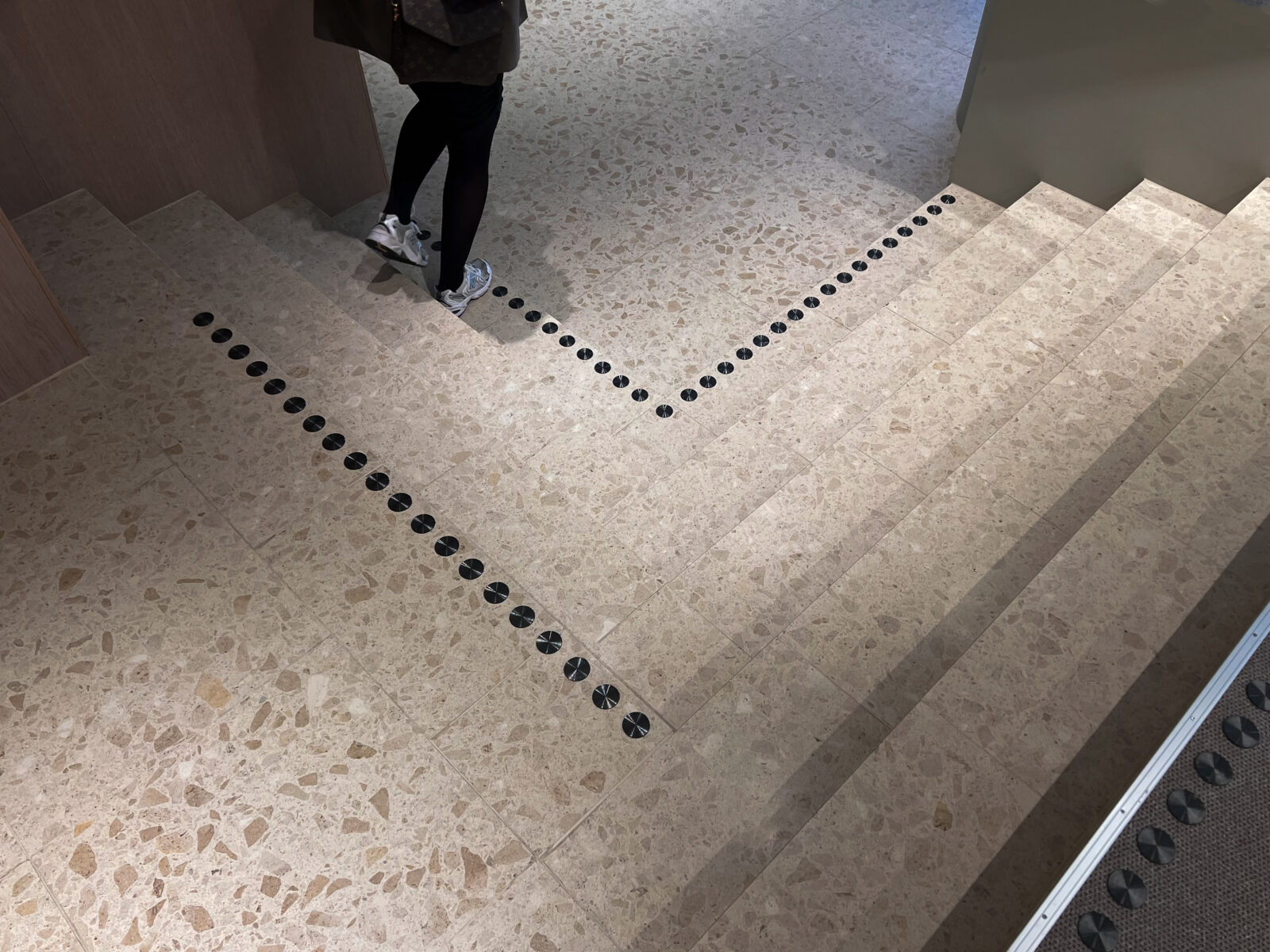
Contrast marking: stairs and level changes.
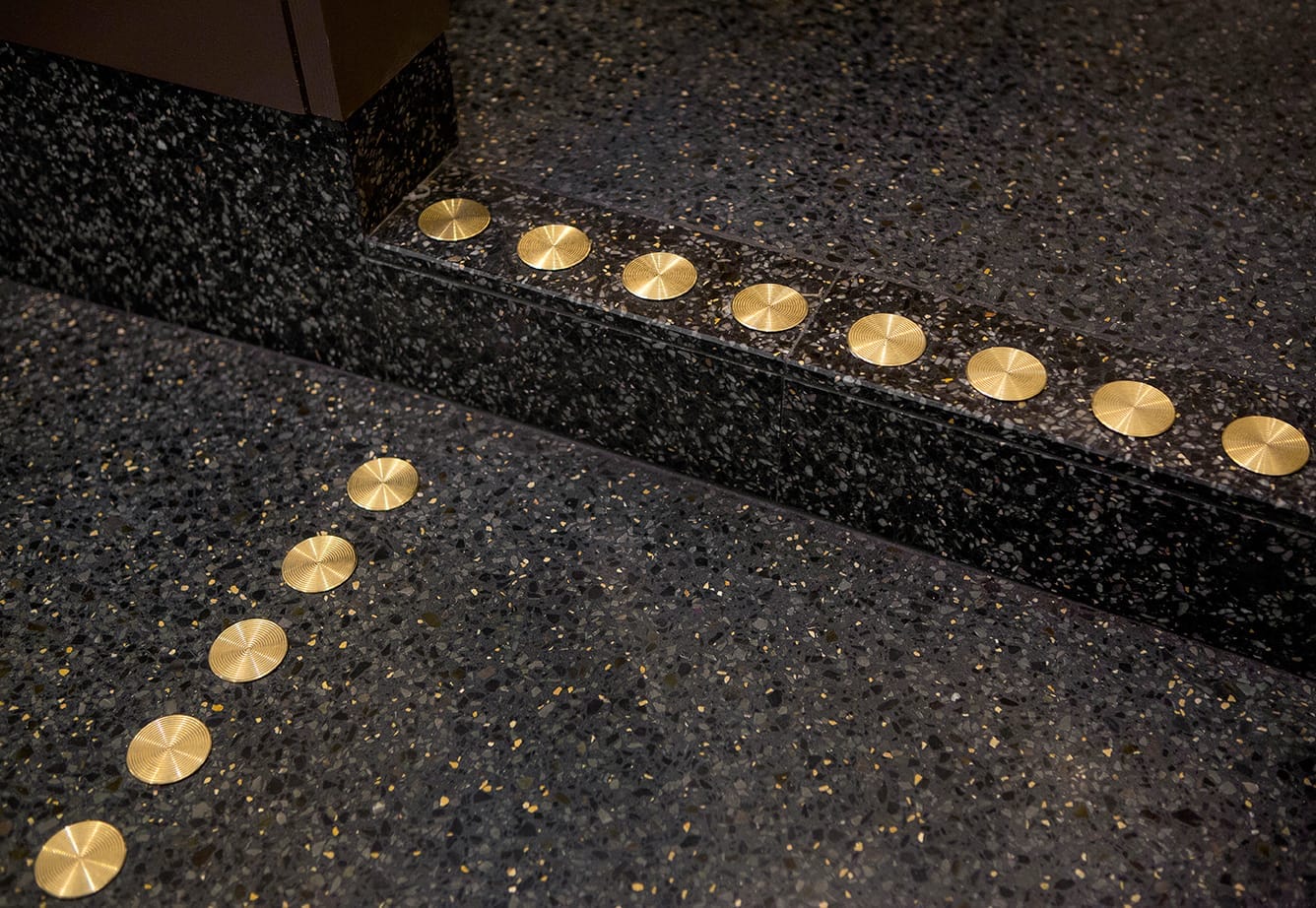
Contrast marking: stairs and level changes.

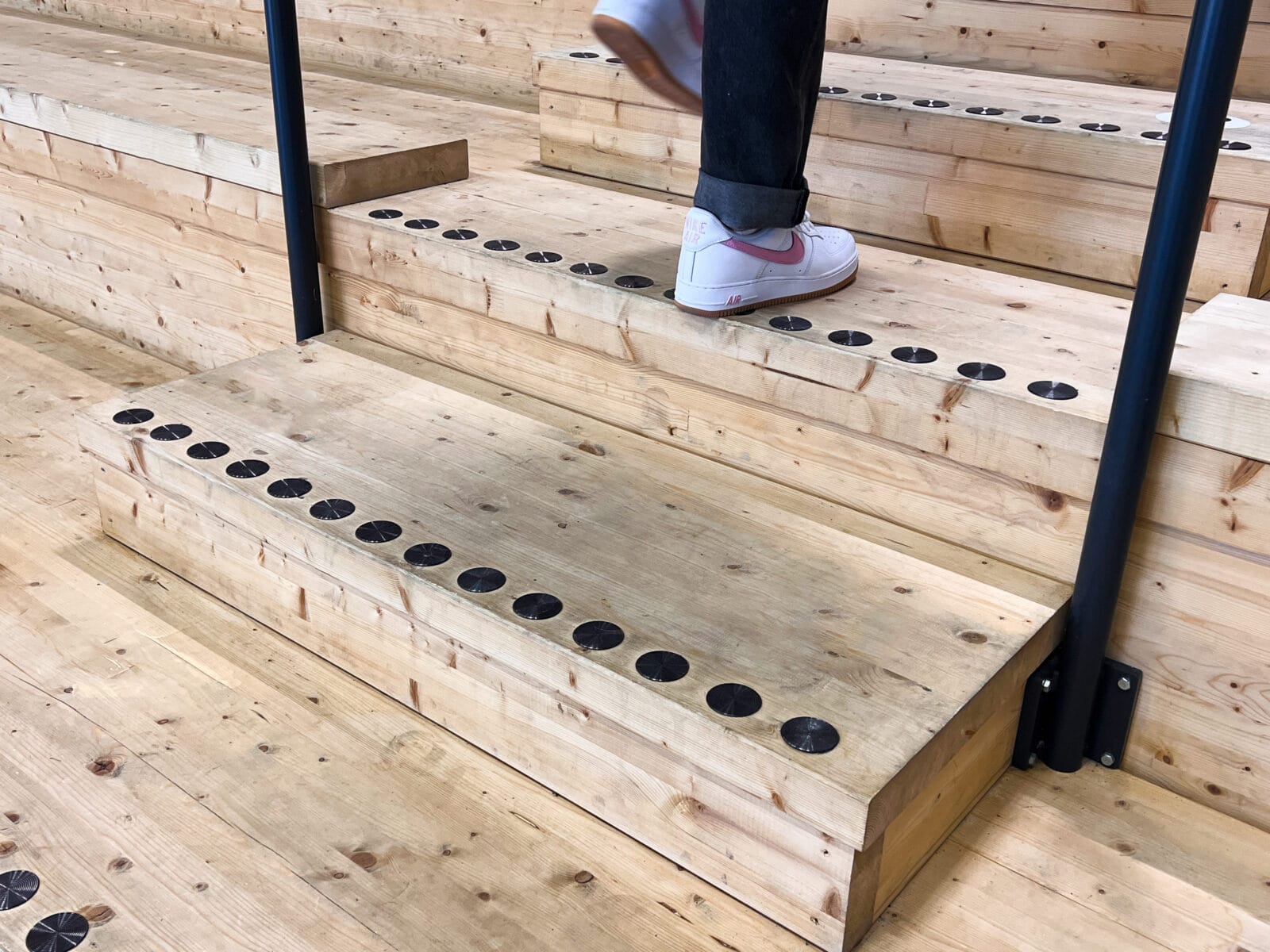
To help people with visual impairments detect obstacles and potential hazards, stairs and level changes should be equipped with contrast markings. The color of the markings depends on personal preference and the surroundings – the main point is that the markings are clearly visible and contrast with the surrounding surface. Good contrast is achieved through distinct materials or colors, as well as lightness differences.Stairs should have contrast markings on the top and bottom steps of each flight, and the markings should be consistent throughout the building – either as dots or lines. Contrast markings are especially important for stairs and steps that are unexpected or less obvious.Contrast dots should be at least Ø 50 mm and placed no more than 20 mm from the edge, with a spacing of no more than 30 mm.
Kontrastmarkering mässing på mörkt stengolv

The benefits of contrast markings.

Contrast markings make a big difference to the indoor environment. Including them in the drawings from the start, and then developing a design that aligns with the overall concept, ensures a well-thought-out result at every stage. Let your creativity flow! Whatever your vision for your contrast markings, we are here to help make it a reality. We support you from start to finish, assisting with consultation, design, and installation – all to ensure you get exactly the contrast markings you want.
Contrast marking: doors, windows, and glass.
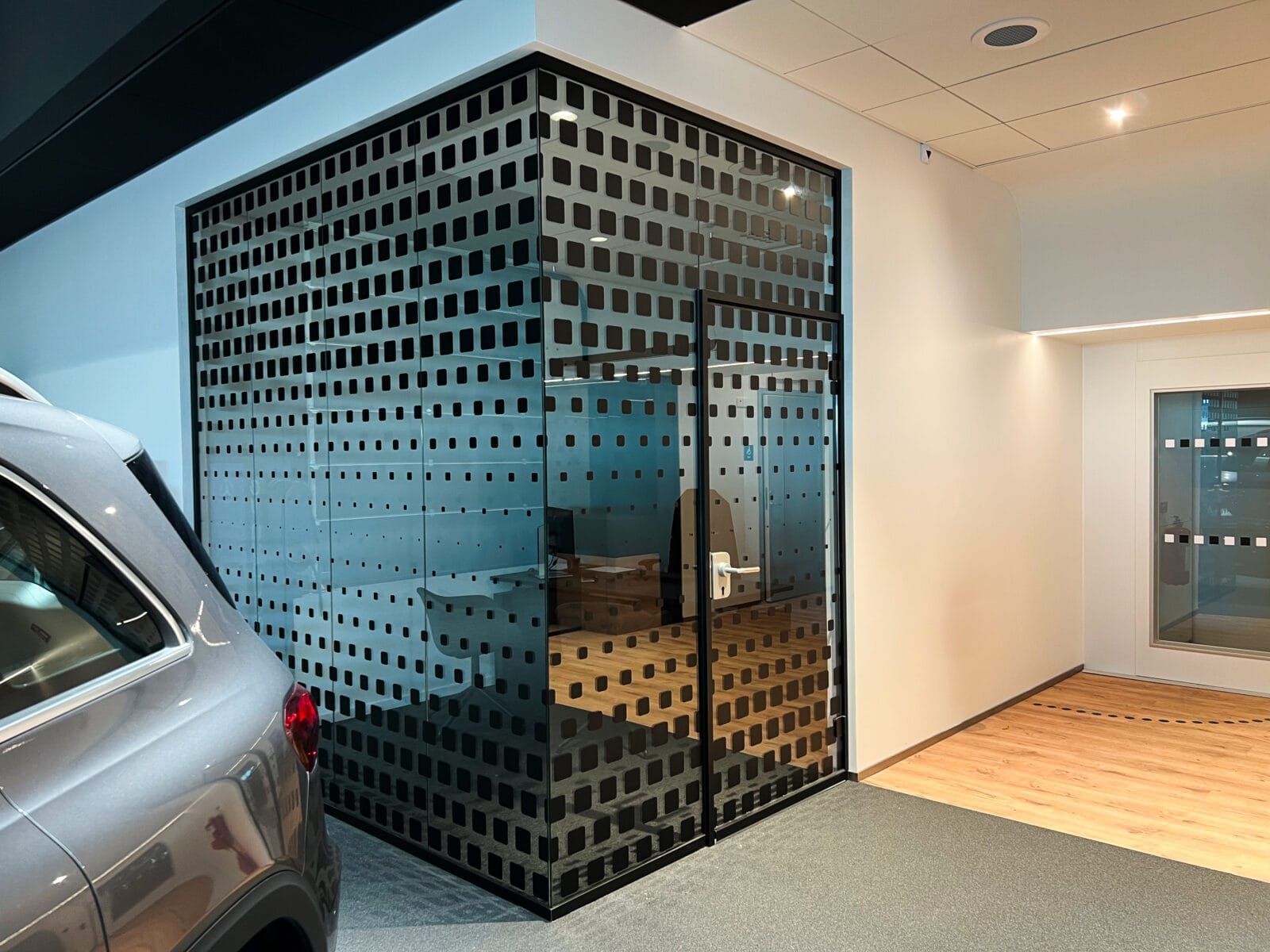
Contrast marking: doors, windows, and glass.

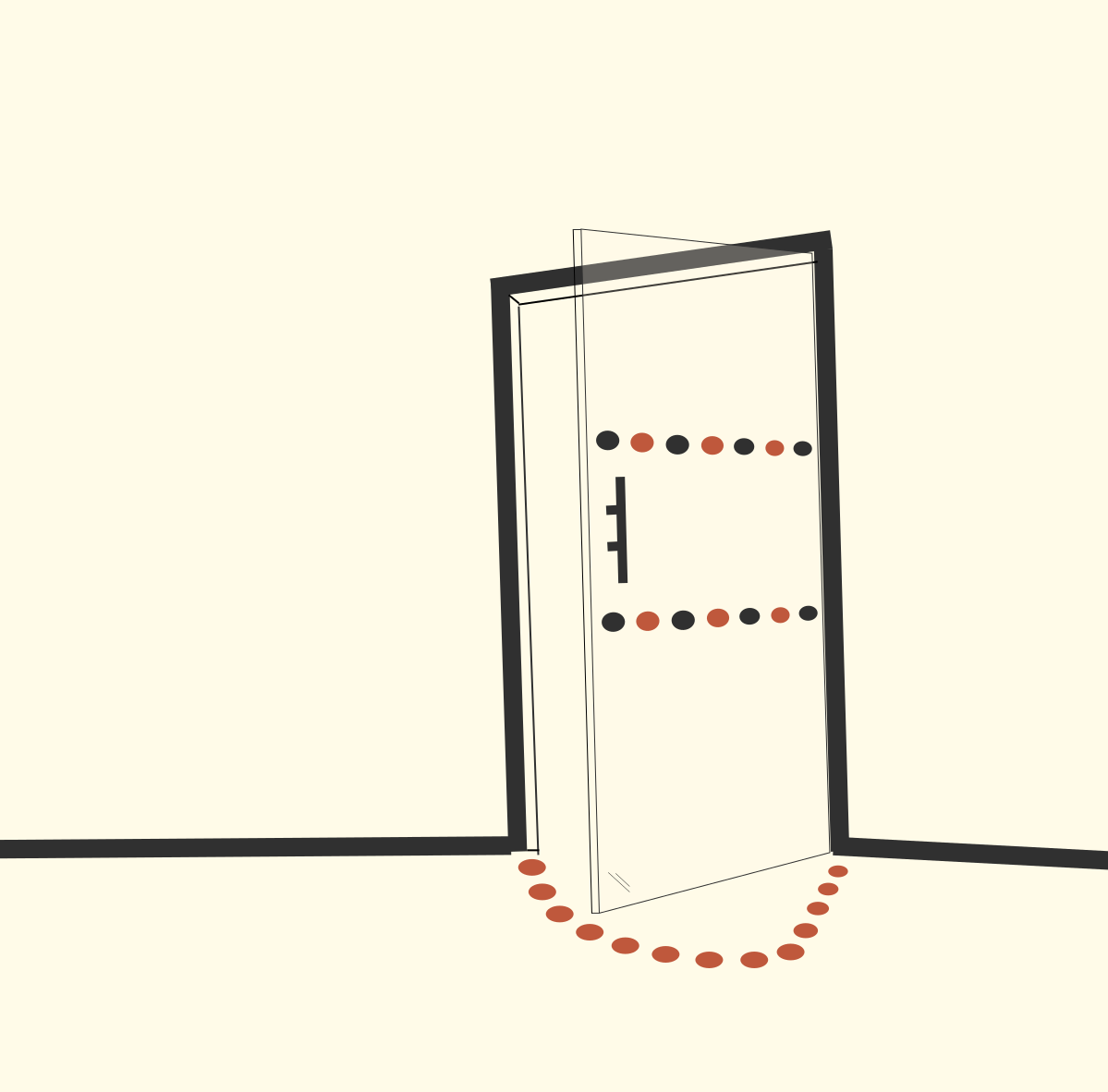
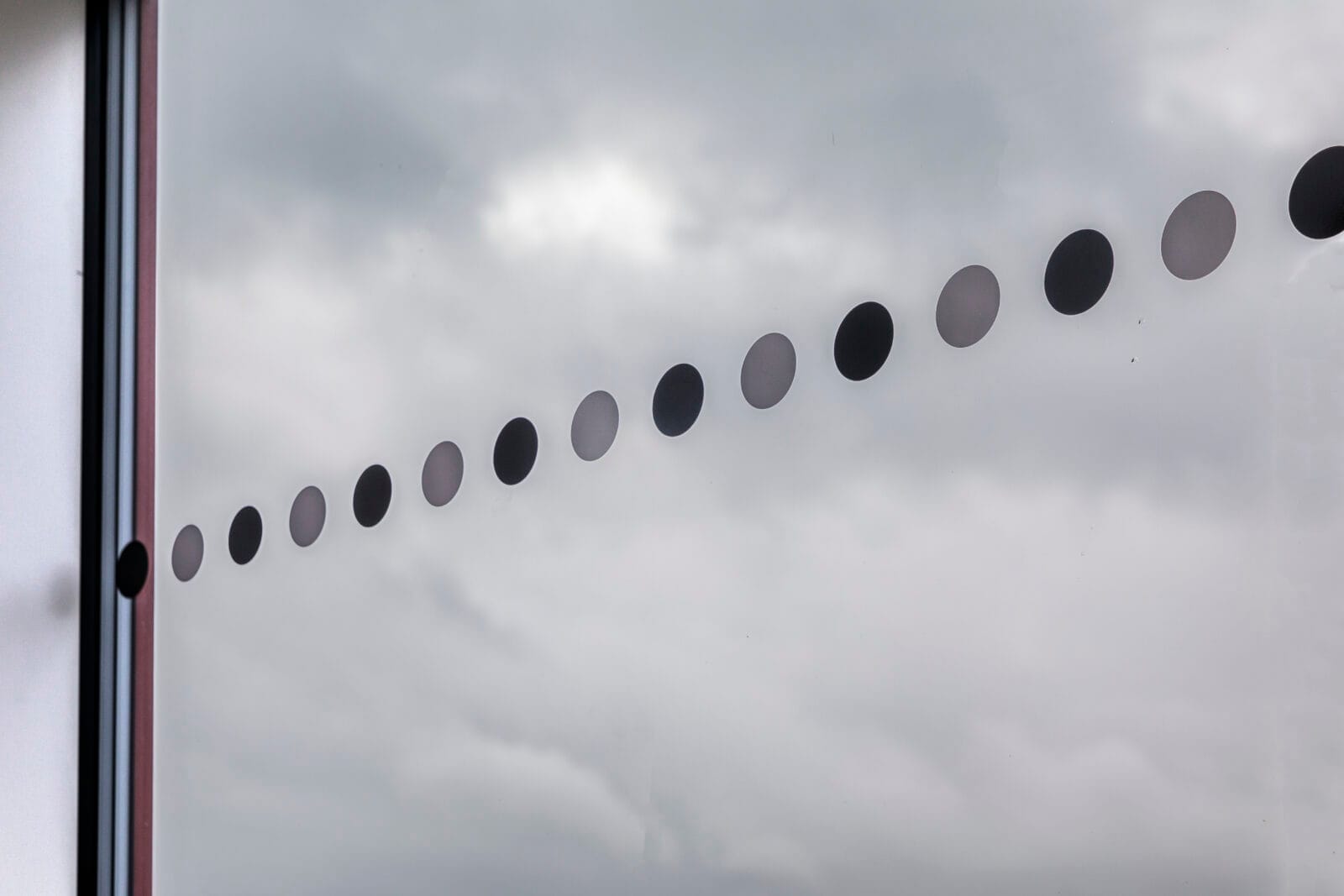
For doors with automatic openers without stop sensors, it is important to mark the space where the door swings – the so-called door sweep. This can be easily done by placing contrast markings in an arc that follows the door’s swing area.Large, unprotected glass surfaces should be marked so that visually impaired individuals can more easily notice the glass panel. The same principle applies as with stairs: contrast markings should use a distinct material or color and have a lightness contrast of at least 0.4 NCS. The contrast should be against the surroundings behind the glass, not the glass itself.Markings should be placed at eye level for both standing and seated individuals. The best approach is to place the markings at two different heights: one at 90 cm from the floor, and the other at 150 cm from the floor.
Contrast marking: design of glass markings.
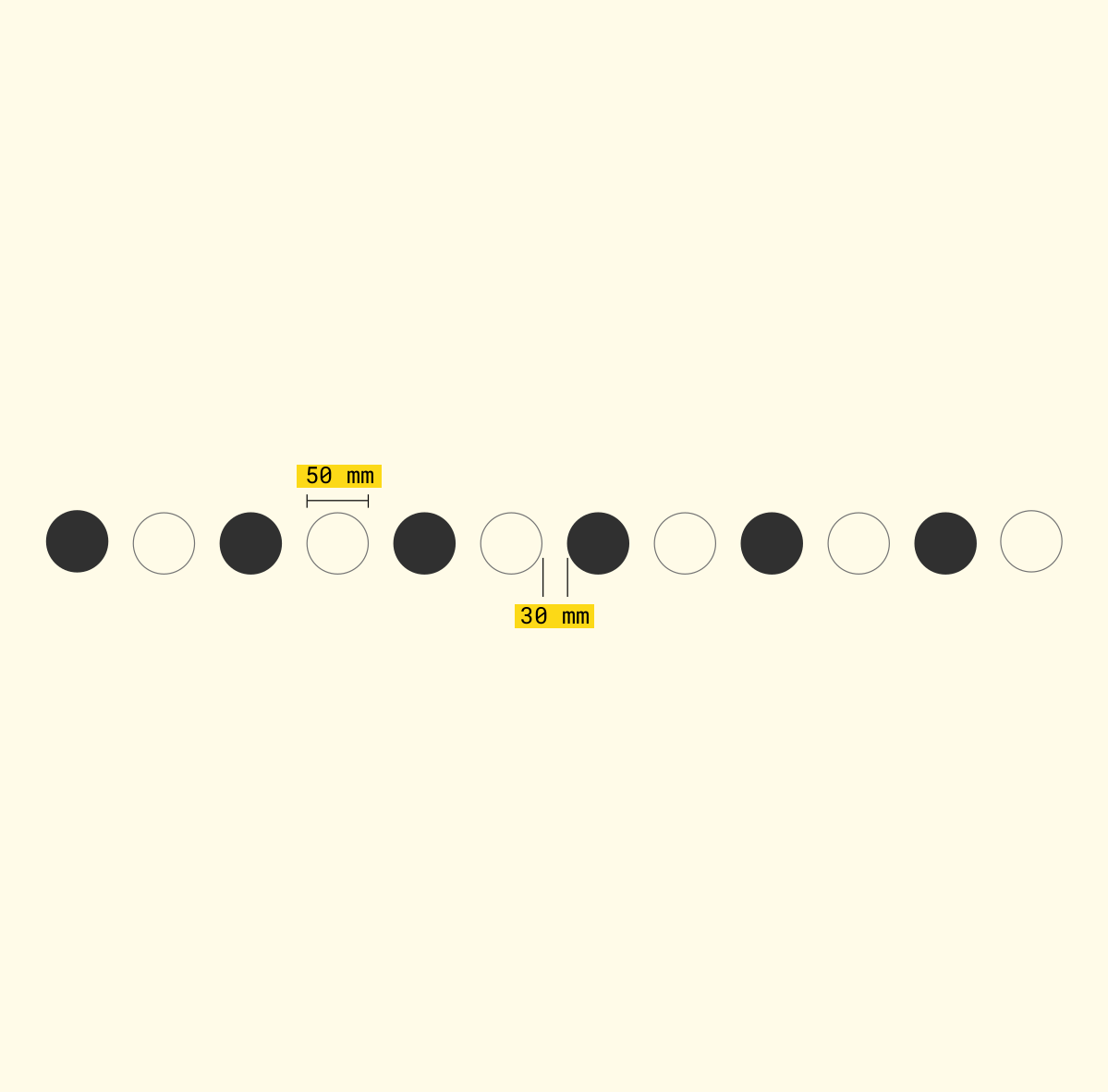
Contrast marking: design of glass markings.

There are no specific requirements for the design of contrast markings, as long as they are at the correct height and provide sufficient contrast. However, there are recommendations for how standard dots should be designed: light and dark dots with a Ø of 50 mm, placed with a spacing of 80 mm from center to center – that is, 30 mm between each dot.
Custom designed contrast markings for glass.

Custom designed contrast markings for glass.

Glass markings are fantastic. They help visually impaired individuals and can truly elevate a design concept to the next level. We see glass markings as the cherry on top – the finishing touch – but they don’t have to be just dots.We help you create customized markings that align with your concept, and ensure they meet the recommendations and requirements for accessibility.
Contrast marking: attachment methods.

How to install contrast markings.

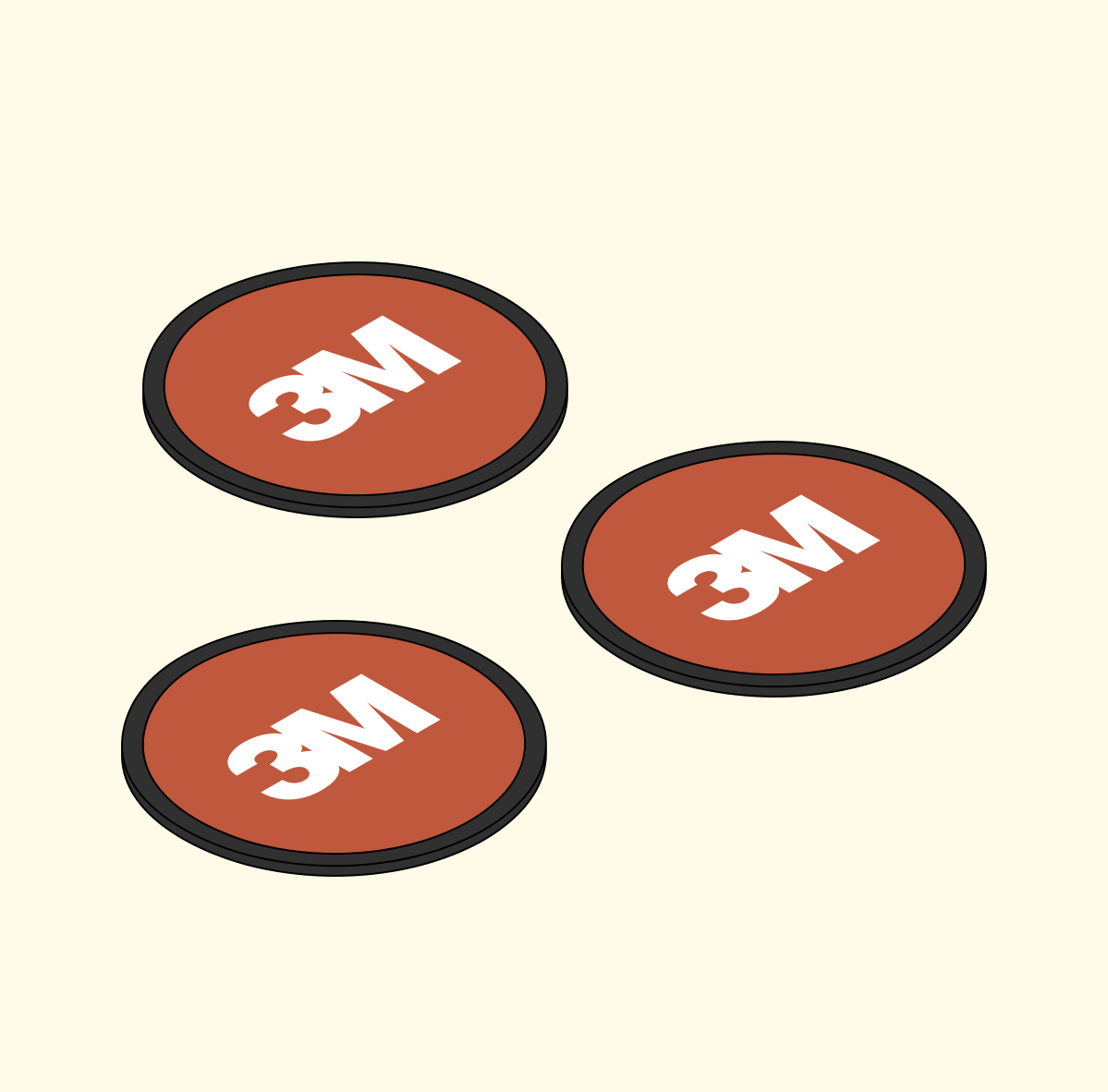
Installation: 3M tape.

Installation: 3M tape.

While tactile guidance strips are both visual and tactile, contrast markings are primarily a visual aid. They are much lower in height and are not subjected to as much impact or side load. 3M tape is therefore an excellent attachment method – quick, easy, and durable. It works for contrast markings on almost any material. A great method for smooth stairs made of stone, concrete, and treated wood indoors.
Installation: pins.

Installation: pins.

Pins are the strongest and most durable attachment method but require a bit more work. The pins, made from the same material as the profile, are inserted into pre drilled holes and glued in place with mounting adhesive.This method is suitable for all types of stone and concrete floors, both indoors and outdoors. For outdoor stone and concrete installation, this method is highly recommended. It takes some effort, but the result is worth it: durable, impact resistant, and long-lasting – perfect for high-traffic and heavily loaded areas.
Installation: Adhesive.

Installation: Adhesive.

Contrast markings can also be installed using adhesive. In this case, they come with a completely smooth backside and are easily glued in place with an adhesive suitable for both the substrate and the profile material.The adhesive method works on stone, concrete, and wooden floors, and is particularly suitable for surfaces with some texture. Adhesive is excellent for filling gaps between the marking and the substrate.
Installation: screws.

Installation: screws.

Contrast markings that are to be mounted on wooden surfaces can advantageously be screwed in place. The markings come with pre drilled screw holes and are easily fastened using stainless steel screws.The screw method is time-efficient and provides a strong and weather resistant result, making it perfect for outdoor wooden surfaces.

Den som väntar på något gott...

Sidan finns tyvärr inte än.

Välkommen tillbaka inom kort!

Quote list

Drag files here or click to upload
Max 4 files, max 5MB per file
File types: jpg, png, pdf
Thank you for your inquiry!
We will get back to you as soon as possible.

Favorites

Trial box

Fill in the form and we will send you a trial box.

The trial box contains a selection of our most popular products.

We will contact you to confirm your order.

The trial box is free of charge and you are not committed to anything.

Thank you for your inquiry!
We will get back to you as soon as possible.

3D files

Fill in the form to download our 3D files.

Download starts automatically!