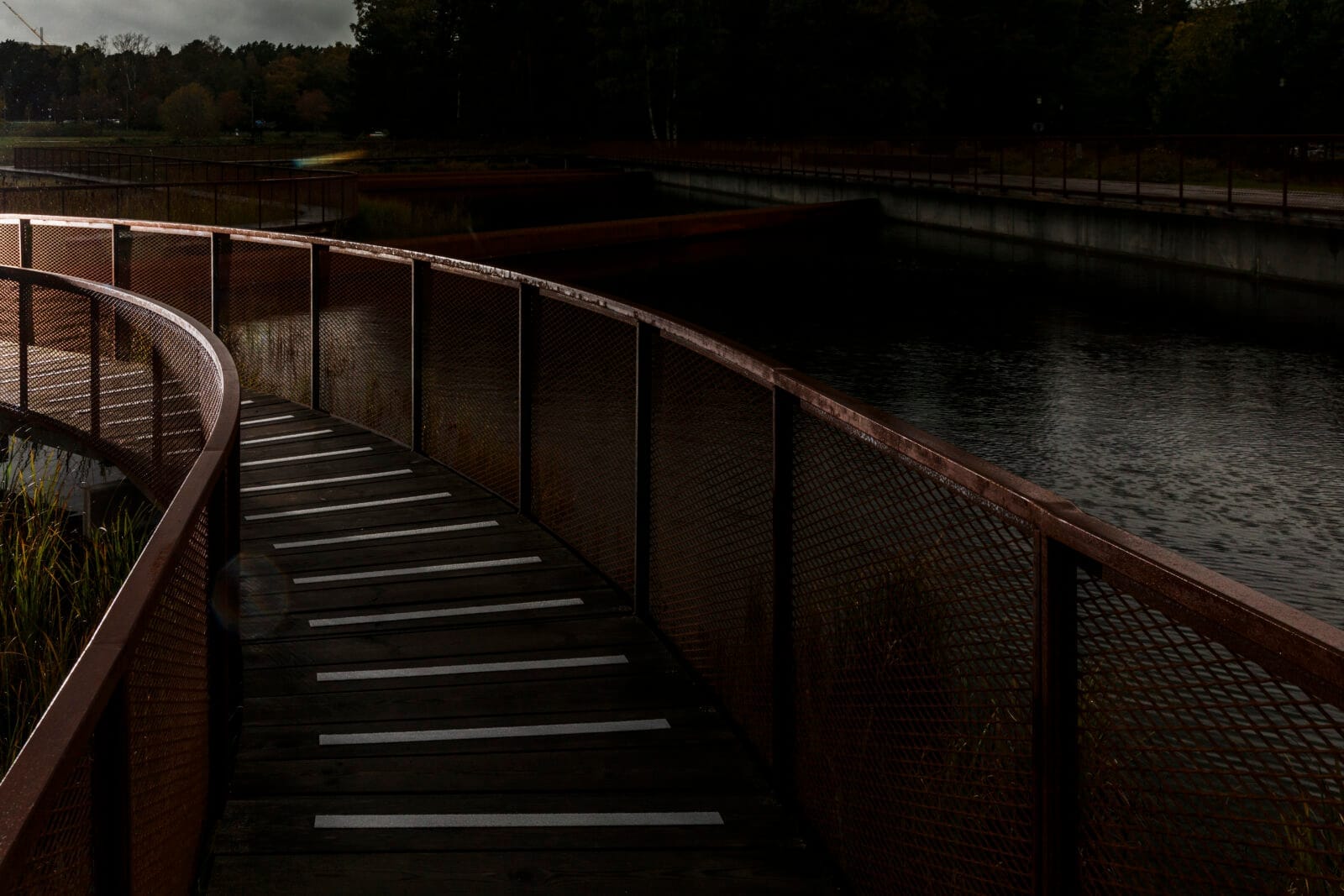
Slip resistant floors – safety for us all.
A well polished and glossy floor can look very luxurious, but these floors are often extremely slippery. However, this can be solved – without dulling or changing the appearance of the floor. How? We’ll explain that here.
Here’s how you can measure how slippery a floor is.
A smooth and glossy floor can look very luxurious, but these well-polished floors are often extremely slippery – whether made of vinyl, tiles, or wood. Add a little water, and most materials become slippery, which can lead to serious personal injuries.If injuries occur at home, personal accident insurance may provide coverage. However, if they happen in the workplace, on the way to or from work, or in a public environment, the municipality or the company may be held liable for damages.Several different methods are used to measure how slip-resistant floors are. In addition, there are other factors that can be adjusted to reduce floor slipperiness.
Values of the slippery slope.
For a non-slip floor to meet the European standard, two separate tests are required. The first is a test where a sled is dragged on the floor and the coefficient of friction must be at least 0.30. The second test works in the same way but with the difference that the surface is first treated with soap and water.
The pendulum test.
By placing an artificial heel on a pendulum, it is possible to test the friction of the floor over a long period of time. A normal rubber sole is placed under the heel to symbolise a normal shoe. The pendulum then moves across the surface, and the more friction the floor has, the harder the pendulum has to work. In this way, it is possible to measure how slip-resistant the floor is.
In cases where this value is printed on the floor, look for a value above 36 as this is the safest group. Those with a value between 0-24 have a very high slip resistance, 25-35 medium and above that low.
Surface roughness.
Surface roughness means that the surface has a pattern that protrudes slightly. It does not need to be visible but still has an effect by increasing friction and reducing the risk of slipping. A micro-stiffness meter is then used, which gives a result in microns. Below 10 means that the floor has a high slip factor, 11-20 is medium, while results above 20 mean that the floor has a roughness that prevents slipping.
Slip rating.For a slip-resistant floor to meet the European standard, two separate tests are required. The first involves dragging a sled across the floor, where the coefficient of friction must be at least 0.30. The second test is carried out in the same way, with the difference that the surface is first treated with soap and water.The pendulum test.By attaching an artificial heel to a pendulum, the floor’s friction can be tested over time. A standard rubber sole is fitted to the heel to simulate a regular shoe. The pendulum then swings across the surface, and the higher the floor’s friction, the more resistance the pendulum encounters. In this way, the slip resistance of the floor can be measured.If this value is stated, look for a rating above 36, as this represents the safest category. Values between 0–24 indicate very low slip resistance, 25–35 medium, and above that high slip resistance.Surface roughness.Surface roughness means that the surface has a slightly raised pattern. It does not need to be visible, but it increases friction and reduces the risk of slipping. A micro-roughness meter is used to measure this, providing results in microns. A value below 10 indicates low slip resistance, 11–20 medium, and above 20 means the surface roughness helps prevent slipping.Ramp test.The ramp test is the most practical method, as it most closely replicates real life conditions and requires a person to perform the test. The floor is coated with oil and positioned at a predetermined angle. A person then attempts to stand or walk on the surface. The test can also be performed barefoot, in which case the floor is covered only with water.Trip hazards.No matter how slip resistant a floor is, it will not be safe if it is not properly secured or if the surrounding interior creates tripping hazards. While it may seem obvious that flooring should be firmly fixed, older vinyl floors can loosen in corners or in areas where they have been damaged.Water.Removing moisture is essential to preventing slips, especially in bathrooms and wet rooms. One effective measure is to shield the floor from direct water sources to prevent splashing. A slightly sloped floor also helps water drain away more quickly. Even a small gradient can significantly improve safety compared to allowing water to remain standing.
Those who have slip-resistant flooring, eliminate potential trip hazards, shield water sources, and ensure proper floor drainage have done what they can to prevent slipping. Accidents, however, can still happen – and that is beyond anyone’s control.
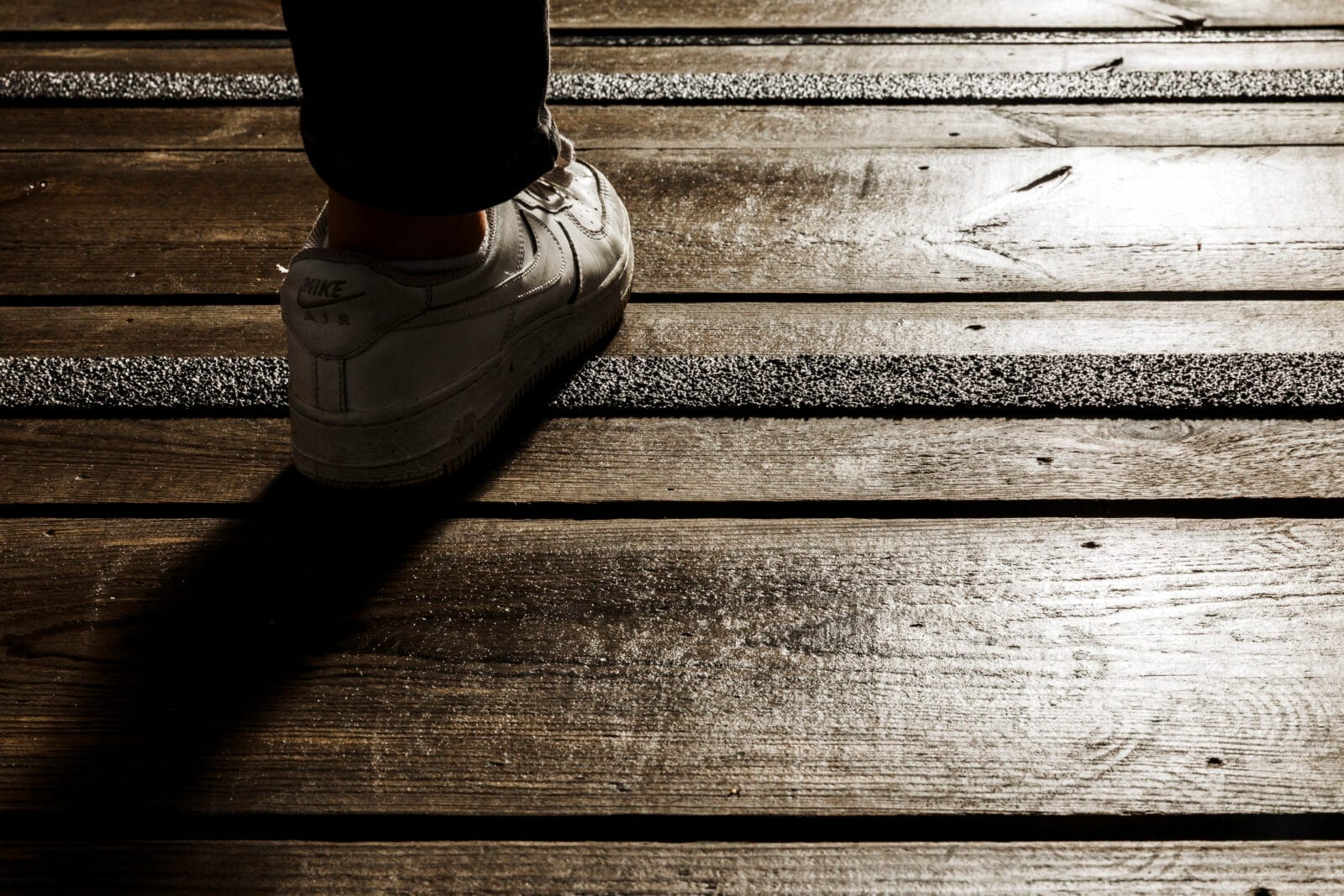
Safestep’s anti slip solutions for slippery floors.
We offer anti-slip solutions for all types of surfaces, both outdoors and indoors. With our carefully developed product range, we can help you find a solution that suits your needs – whether it’s a slippery staircase, a frosty patio, a slick stone floor in a swimming facility, or oily grating.Contact us and we’ll be happy to help!